From Research Ideas to Impact: ARUA Regional Workshop Empowers Africa’s Early Career Researchers

Accra, Ghana | 19–20 November 2026
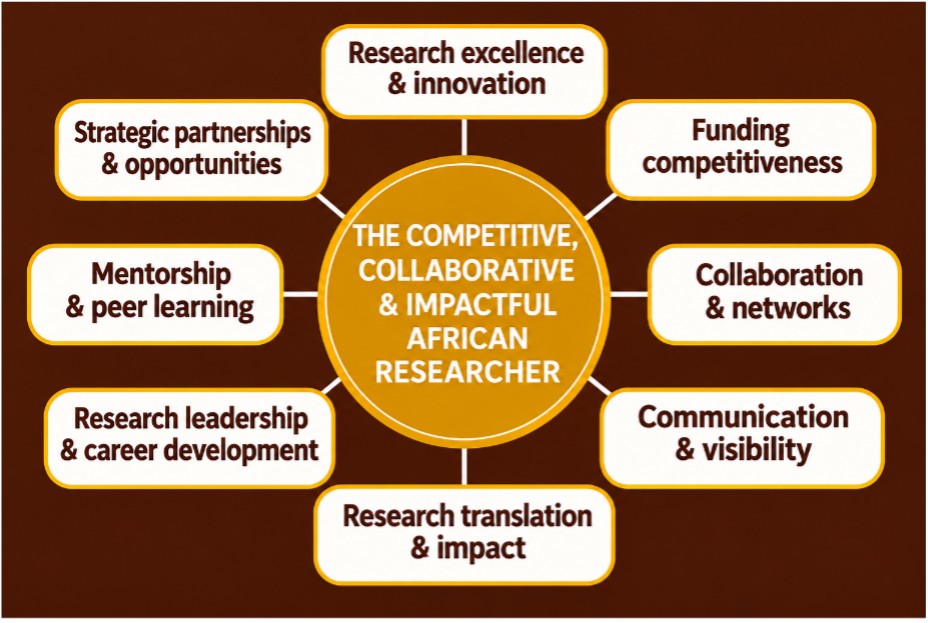
The African Research Universities Alliance (ARUA) successfully convened its second Regional Workshop for Early Career Researchers (ECRs) on 19–20 November 2026 at the University of Ghana, under the theme “Nurturing the Competitive, Collaborative and Impactful African Researcher.”
The workshop brought together 49 ECR Fellows hosted across ARUA Centres of Excellence (CoEs) and Africa–Europe Clusters of Research Excellence (CoREs), at different stages of their six-month fellowships supported by the Mastercard Foundation and the Andrew Carnegie Foundation. They were joined by selected CoE Directors, mentors and senior researchers drawn from the ARUA network and partner institutions.
The two-day programme provided an interactive platform for strengthening research competitiveness, fostering collaboration and enhancing the visibility and societal impact of African research.
NURTURING AFRICA’S NEXT GENERATION OF RESEARCH LEADERS
Welcoming participants, ARUA Secretary-General Prof. John Gyapong encouraged the ECR Fellows to make the most of the workshop to strengthen their research skills, build meaningful collaborations and position themselves as the next generation of African research leaders.
Dr Folashadé Soulé, representing the Mastercard Foundation, reaffirmed the Foundation’s commitment to strengthening the capacity of the next generation of African researchers and expressed appreciation for the opportunity to partner with ARUA in advancing this shared goal.
Officially opening the workshop on behalf of the University of Ghana Vice-Chancellor, Prof. Nana Aba Appiah Amfo, Prof. Samuel Nii Ardey Codjoe, Pro Vice-Chancellor for Research, Innovation and Development, underscored the importance of mentorship, inclusive opportunities and strong research networks in nurturing Africa’s next generation of researchers.
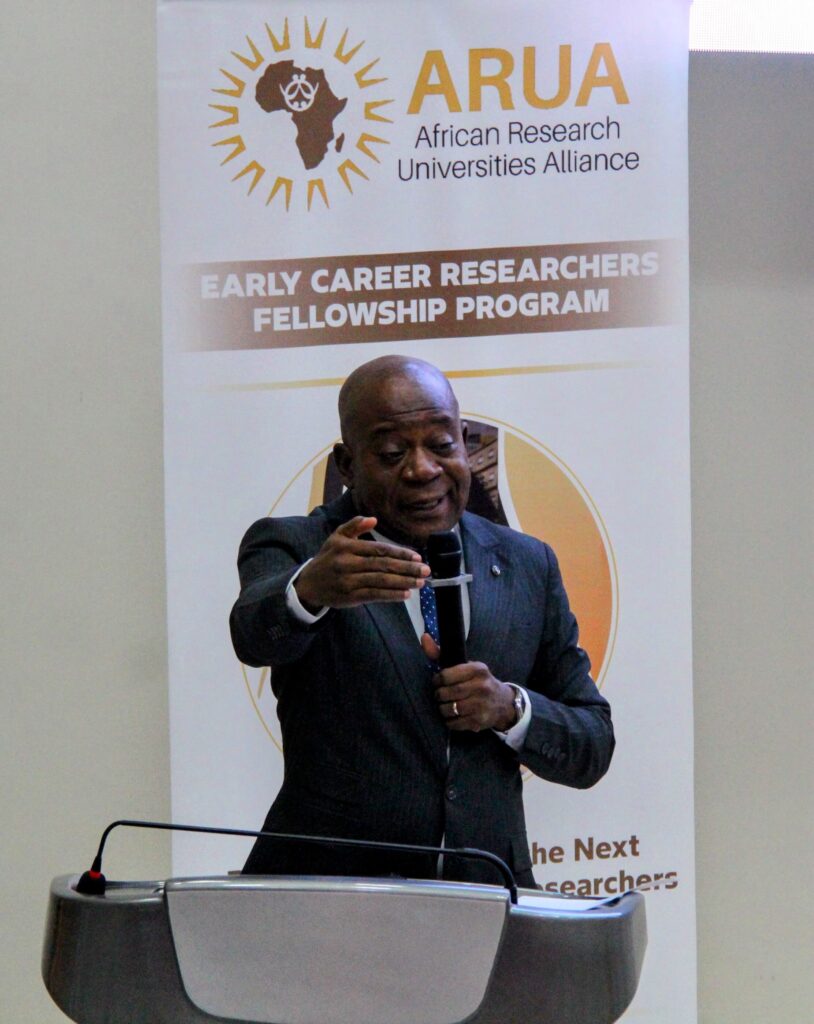
“A successful research career should advance not only the researcher, but also the society that supports and depends on that research.”
— Prof. Samuel Nii Ardey Codjoe, University of Ghana
Setting the agenda, Prof. Jane Ambuko, ARUA Director of Research and Training, emphasised that research excellence alone is no longer sufficient to succeed in an increasingly competitive research environment. She encouraged ECRs to take full advantage of the workshop sessions and the expertise of facilitators and mentors to refine their research concept notes, strengthen their research pitches and develop practical career development roadmaps. She also underscored the importance of attracting research funding, building strategic collaborations and translating research findings into solutions that address societal challenges.
FROM PREPARATION TO PRACTICE: STRENGTHENING RESEARCH COMPETITIVENESS
The intensive, hands-on workshop was preceded by preparatory activities designed to maximise participants’ engagement and learning. ECRs were guided to develop two-page research concept notes in response to two active calls for proposals. A total of 31 concept notes, comprising 21 individual and 10 multidisciplinary collaborative research ideas, provided the foundation for the workshop’s practical sessions.
During thematic research proposal development clinics, experienced researchers and mentors provided constructive feedback to help ECRs strengthen their concept notes and improve their competitiveness for research funding. Complementary sessions on science communication and research pitching equipped participants with skills to communicate their research ideas clearly and persuasively.
Practical career development exercises also enabled ECRs to refine their career roadmaps, identify professional growth opportunities and chart pathways towards research independence and leadership.
Beyond these hands-on activities, expert-led sessions explored competitive research funding, scientific writing and publication strategies, research communication and translation, and pathways to research leadership.
An engaging panel discussion brought together researchers at different stages of their careers to share experiences and practical insights on navigating research career pathways, overcoming challenges and building successful research careers. The networking cocktail provided further opportunities for ECRs, mentors and facilitators to exchange ideas, strengthen professional relationships and explore potential collaborations.
One of the workshop’s most exciting moments was the research pitching competition, where ECRs demonstrated creativity and growing confidence in communicating their research ideas. Outstanding individual and collaborative research pitches were recognised, celebrating both research excellence and the spirit of interdisciplinary collaboration.
ECR REFLECTIONS: BUILDING CONFIDENCE, CONNECTIONS AND IMPACT
The ECRs particularly valued the opportunities for capacity strengthening, mentorship and networking across disciplines and institutions.
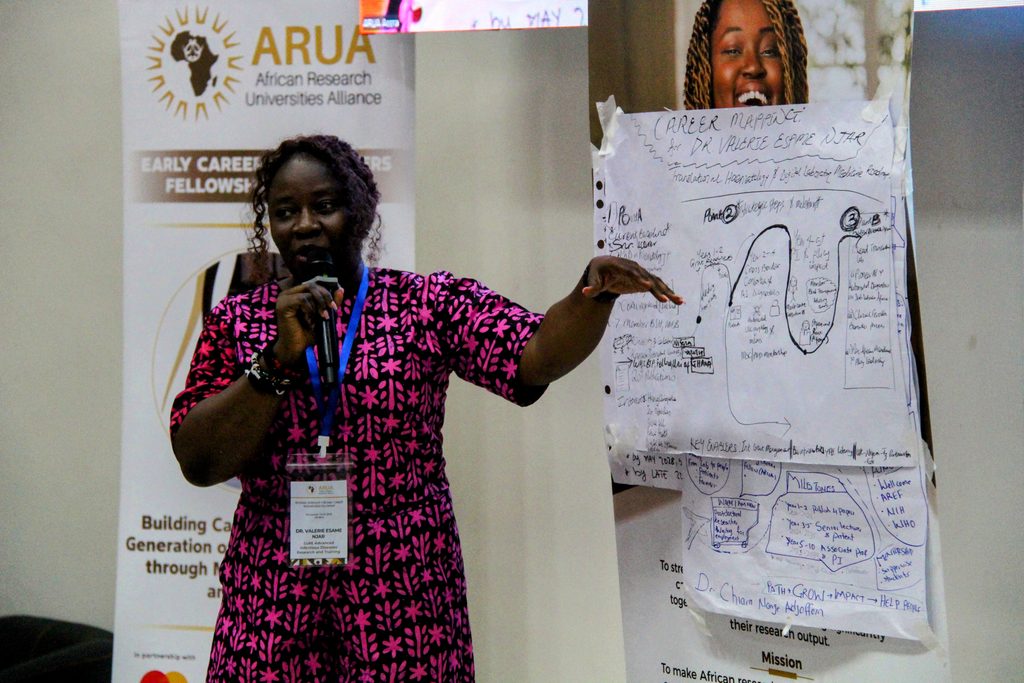
Reflecting on her experience, Dr Valerie Njar, an ECR hosted by the CoRE on Advanced Infectious Diseases Research and Training at the University of Ghana, highlighted the value of practical learning and interdisciplinary collaboration:
“The ARUA ECR Regional Workshop was a transformative experience that sharpened my proposal development skills, connected me with researchers across Africa and strengthened my confidence to pursue impactful research. Our team’s second-place finish in the research pitching competition was an inspiring reminder of what we can achieve through collaboration.”
Dr Ishmael Adjei, an ECR hosted by the CoRE on Migration and Health, similarly expressed appreciation for the support provided through the Fellowship Programme:
“I am deeply grateful to ARUA and the Mastercard Foundation for their continued commitment to nurturing and empowering Africa’s early career researchers. This invaluable support is equipping us with the skills, networks and opportunities to advance knowledge, drive innovation and contribute to shaping the Africa we envision for ourselves and future generations.”
The workshop reaffirmed ARUA’s commitment to nurturing a new generation of African researchers equipped not only to undertake excellent research, but also to compete successfully for funding, build strategic partnerships, communicate their findings effectively and translate knowledge into meaningful societal impact.
ARUA extends its appreciation to the University of Ghana for hosting the workshop, the Mastercard Foundation and Andrew Carnegie Foundation for supporting the ECR Fellowship Programme, the facilitators and mentors for their invaluable contributions, and the participating ECRs for their enthusiasm and active engagement.
Through such initiatives, ARUA continues to strengthen research capacity and foster a vibrant, connected and impactful African research community.


