ARUA Hosts Maiden Information Webinar for Early-Career Researchers in Africa

The African Research Universities Alliance (ARUA) convened a well-attended Information Webinar on the Early-Career Research (ECR) Fellowships, bringing together early-career researchers and research professionals from across Africa and beyond.
The webinar attracted over 150 participants from more than 30 countries, representing a diverse range of universities, research institutes, health facilities, policy organisations, and development-focused institutions. Participation was particularly strong from ARUA member universities, alongside broader engagement from higher education and research institutions across West, East, Central, North, and Southern Africa. Participants also joined from institutions in Europe and North America. Attendees reflected a wide spectrum of the early-career research community, including PhD candidates and doctoral researchers, postdoctoral fellows, early-career lecturers and research fellows, as well as research scientists and professionals from both public and private sector institutions.
In his welcome remarks, Prof. John Gyapong, Secretary-General of ARUA, underscored the central role of early-career researchers in shaping the future of African research and innovation. He emphasised that the ARUA Early-Career Research Fellowships are designed not only to support individual researchers, but also to strengthen research collaboration across African universities

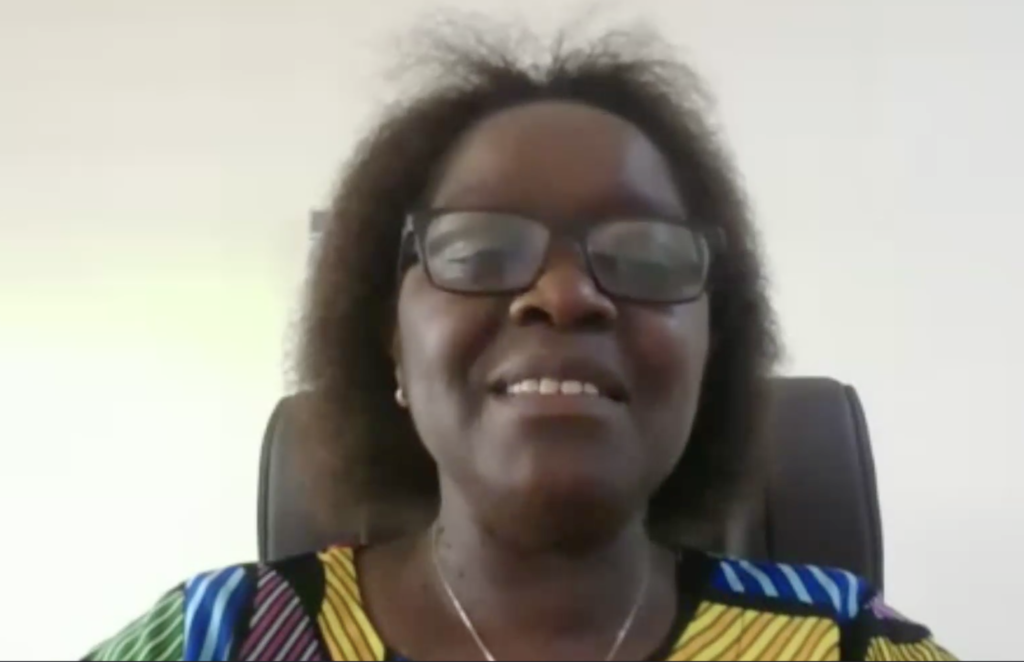
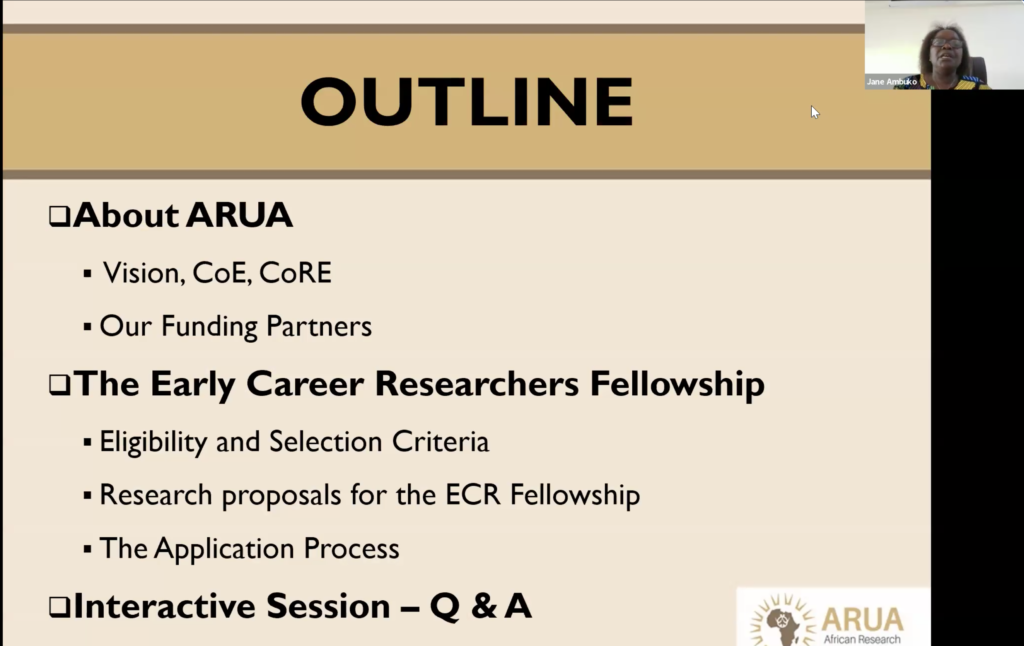
The webinar featured a presentation by Prof. Jane Ambuko, Director of Research and Training at ARUA, who led participants through a comprehensive overview of the ARUA Early-Career Research Fellowships. Her presentation covered the purpose and scope of the fellowship, eligibility requirements and selection criteria, expectations of both host institutions and fellows, as well as key application timelines and common challenges encountered by applicants. Prof. Ambuko also guided participants on how to effectively align their research proposals with the thematic focus of ARUA’s Centres of Excellence (CoEs) and the Africa–Europe CoREs, an area that generated significant interest and discussion during the session. A dedicated question-and-answer segment allowed participants to seek clarification on issues such as institutional endorsement, mentorship arrangements, proposal development, and the review process. The attendees were also taken through a live demonstration of the application process to provide practical guidance on how to complete the online application form.
During the plenary session, many attendees expressed their appreciation to ARUA for organising the webinar, noting that it helped clarify several aspects of the call that had previously been unclear. A key concern raised by many attendees was the 35-year age limit for the ECR fellowship, which they viewed as a significant barrier. They emphasised that in Africa, many scholars complete their PhDs beyond this age, and for many women, this period coincides with starting families and being in their most active reproductive years. Despite these concerns, candidates were encouraged to apply even if they were slightly above the age threshold. Prof. Gyapong noted that for applicants with exceptionally strong research proposals, ARUA would seek alternative funding to support their fellowships.
The information webinar forms part of ARUA’s ongoing efforts to strengthen awareness and access to its programmes among early-career researchers within member universities and partner institutions. By providing direct engagement and practical guidance, ARUA continues to support research development and collaboration across its network.
A recording of the webinar is available on ARUA’s YouTube channel:


