Turning Research Evidence into Impact Stories: ARUA Early Career Researchers Step into Blogging

When African researchers write, Africa should hear it. Yet for many, research still culminates in theses and journal articles that are largely accessed and read only by peers and disciplinary specialists. The African Research Universities Alliance (ARUA) is determined to change that story by supporting its Early Career Researchers (ECRs) to move from “research done” to “research heard, seen and used.”
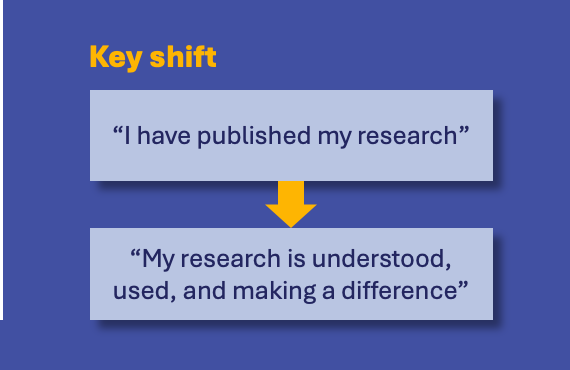
Towards this goal, on 20th March 2026 ARUA hosted an interactive online workshop titled “Blogging for Research Visibility and Career Impact among ARUA Early Career Researchers.” The workshop brought together over 25 ARUA ECRs currently undertaking a six‑month career advancement fellowship supported by the Mastercard Foundation and Carnegie Corporation of New York. The workshop was facilitated by a highly experienced science communication expert Sabrina Trautman and formed part of ARUA’s broader agenda to strengthen research capacity and promote Africa‑led knowledge that meaningfully informs policy, practice and public debate.
The workshop built on a recent regional convening for the same ECR cohort, where participants highlighted a clear gap and need for capacity strengthening in science communication. While ARUA ECRs are producing high‑quality research, many have had limited exposure to non‑academic communication channels, particularly blogging. Yet blogs are a powerful way to translate research findings, fellowship experiences, conference engagements and community work into accessible narratives that can reach policymakers, practitioners, funders, media and the wider public. Well‑crafted blogs also enhance personal branding, strengthen institutional visibility and amplify researchers’ views in key conversations that drive socio‑economic transformation.
As behavioural economist Daniel Kahneman reminds us, “No one ever made a decision because of a fact. They need a story.” Researchers therefore need to convey their work and innovative ideas clearly to non‑specialist audiences, to tell the story of their research, and to connect their findings to real‑world concerns.
In her opening remarks, Prof. Jane Ambuko, ARUA’s Director of Research and Training, underscored that effective communication is a critical component of an early career researcher’s journey, alongside other research skills and academic publications. When research remains confined to academic platforms, she noted, opportunities are lost for evidence to inform decisions, influence practice or shape public understanding of contested issues – from GMO debates to climate adaptation, public health, youth employment and everything in between. Building communication skills is therefore central to both career advancement and the impact agenda that ARUA champions.
At the end of the intensive and interactive session, participants gained insights into three key aspects of science communication:
- Why research does not automatically lead to impact.
- The importance of understanding different target audiences for a message or blog.
- How to turn academic work into clear and engaging messages.
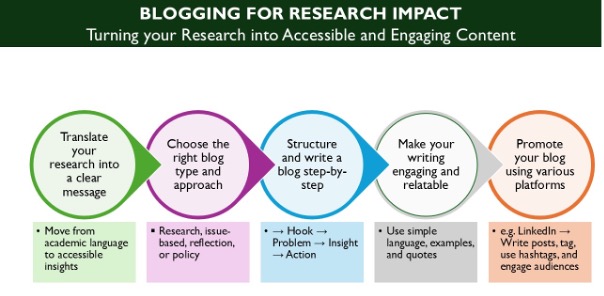
The facilitator walked ECRs through key steps for impactful blogging, as summarised below:
A poll conducted during the workshop revealed that only one ECR blogs regularly, five have written a blog once or twice, while the remaining participants have never written a blog. By the end of the workshop, however, all the ECRs expressed enthusiasm to delve into the blogging space. Many wanted to know where they could publish their blogs for high visibility and impact. It is expected that each ECR will now attempt to write a blog about their research, fellowship activities or other engagements that carry a compelling story for their target audiences.
The blog‑writing workshop is part of ARUA’s commitment to nurturing a new generation of scholars who are not only producing compelling research evidence, but also telling the story of that evidence in ways that resonate with policy makers, practitioners and communities. As more ECRs take up blogging, the distance between university research and the intended users and consumers of this research narrows. Ultimately, Africa gains more credible, context‑grounded voices in conversations that matter for its future.
In the longer term, ARUA anticipates increased visibility of ECR research on ARUA platforms, institutional websites and partner sites, contributing to a stronger ecosystem of Africa‑led research communication.


