Rethinking PhD Training In Africa: ARUA Joins Regional Dialogue On Models that Deliver Quality and Impact

The African Research Universities Alliance (ARUA) joined higher education leaders, researchers, policymakers and other stakeholders in Diani, Kenya, on 27–28 August 2026 for an important conversation on the future of doctoral training in African universities.
Convened by the Partnership for African Social and Governance Research (PASGR), the PhD Models Project: Research and Transformation of Doctoral Practices and Procedures in African Universities is a three-year initiative aimed at developing a conceptual and delivery framework to improve the efficiency, effectiveness and quality of doctoral training in Africa through the identification of innovative processes and best practices.
The inception workshop brought together project teams from Ethiopia, Ghana, Kenya, Nigeria, Senegal, South Africa and Uganda, alongside key stakeholders in higher education. It served as the first co-creation platform under PASGR’s Utafiti Sera model, through which researchers and stakeholders jointly generate knowledge and support its translation into institutional and policy action.
The Challenge: PhDs are taking too long and delivering too little impact
A panel discussion featuring the principal investigators from the seven countries revealed considerable diversity in doctoral training models, but also strikingly similar challenges – low completion rates, prolonged time-to-degree, inadequate supervisory capacity and persistent funding constraints. In many cases, PhD programmes designed for completion within three to four years take considerably longer. Concerns were also raised about academic inbreeding and, importantly, the disconnect that can exist between doctoral research and the real-world societal challenges that research should ultimately help address.
There is no “one-size-fits-all” PhD model for Africa. The priority is to identify the principles and practices that enable doctoral training to deliver quality, timely completion and societal impact.
The discussions reinforced an important conclusion, that there is no single PhD model that will work across Africa’s diverse universities, disciplines and national contexts. The challenge is therefore not simply to identify a “best model”, but to establish the principles, practices and enabling conditions that make doctoral training effective.
Beyond the degree: producing knowledge that matters
Setting the tone for the workshop, Prof. Mwenda Ntarangwi, Vice-Chancellor of United States International University-Africa (USIU-Africa), challenged participants to reconsider what success in doctoral education should mean. In his keynote, Rethinking PhD Models in Africa to Strengthen Quality and Impact, Prof. Ntarangwi described three motivations associated with doctoral training: promotion, prestige and production of knowledge: the “3Ps.” He observed that the third P, and arguably most important one, is too often inadequately realised.
He reiterated that doctoral training should not end with the award of a degree but produce new knowledge, innovation and researchers capable of contributing solutions to society’s challenges.
Dr Caroline Hunja, representing Kenya’s Ministry of Education, similarly challenged universities to pay greater attention to why candidates enter doctoral programmes. Drawing on her own academic journey, she observed that some candidates enter PhD programmes without a sufficiently clear sense of purpose, while others become incorporated into externally funded projects primarily as data collectors rather than developing as independent researchers.
ARUA’s perspective: from PhD Programmes to PhD Training Ecosystems
For ARUA, strengthening doctoral education requires looking beyond the individual university as the sole training environment.
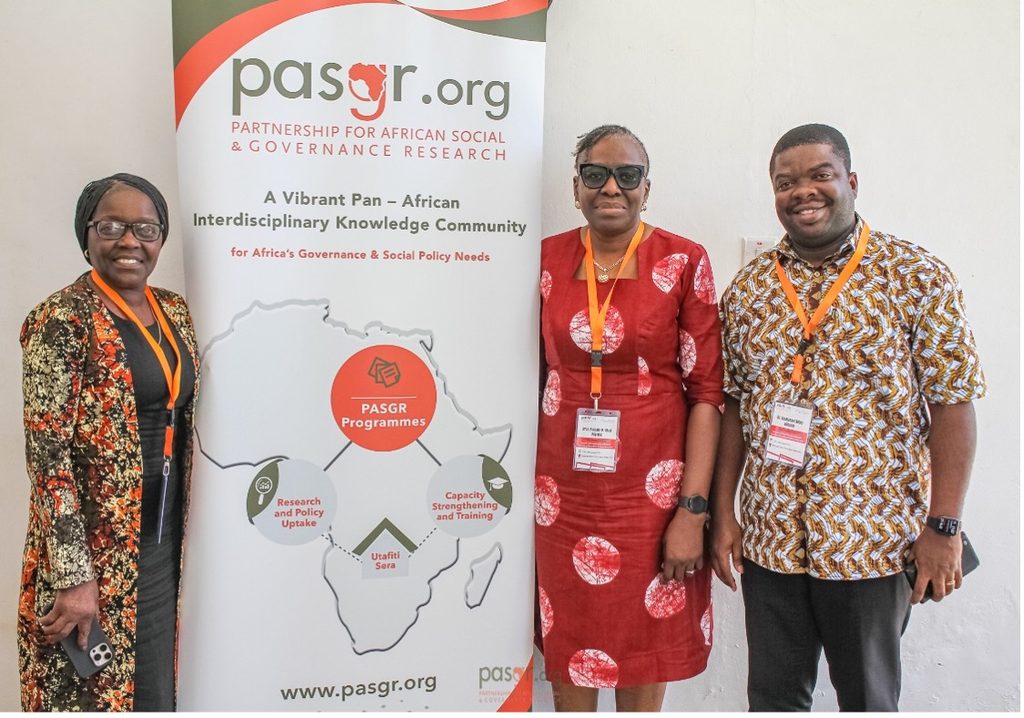
Representing ARUA, Prof. Jane Ambuko, Director of Research and Training, emphasised the need for a doctoral training ecosystem that develops the candidate not simply to complete a thesis, but to emerge as a well-rounded researcher who is well supervised, adequately mentored, internationally exposed and connected to wider research communities.
“The PhD should not simply produce a graduate with a thesis. It should produce a well-rounded researcher who is mentored, exposed, connected and equipped to contribute meaningfully to knowledge creation and society.” Prof. Jane Ambuko
This approach resonates strongly with ARUA’s model of the African University in which institutional boundaries become more porous and universities use networks and partnerships to expand the research and training environment available to doctoral candidates.
ARUA’s network of 13 Centres of Excellence and the associated 22 Africa–Europe Clusters of Research Excellence provides an important platform through which doctoral researchers can access expertise beyond their home institutions, participate in multidisciplinary research, build international networks and benefit from mentorship and mobility opportunities.
Trust, Collaboration and A Model That Works
PASGR Executive Director Prof. Fadel Ndiame underscored another critical ingredient: trust. Strengthening doctoral education will require African universities and their partners to work collectively rather than institution by institution, building relationships that enable resources, expertise and learning to be shared.
The workshop therefore moved the conversation beyond identifying weaknesses in current systems towards defining “what works.” Participants began developing criteria for assessing different doctoral models and identifying principles that could be adapted to different disciplines and national contexts.
Closing the workshop, Dr Pauline Ngimwa, Project Lead and Manager, Professional Development & Training at PASGR, captured the emerging consensus – that business as usual will not deliver the doctoral graduate that African universities and societies need.
The question is no longer simply, “Which PhD model works?” but rather, “What principles and practices will make doctoral training work — for the candidate, the university and society?
As research begins across the seven participating countries, attention will now turn to translating the evidence into practical reforms.
For ARUA, this conversation speaks directly to a broader ambition – moving doctoral education from an individual programme within a single university towards a connected research and training ecosystem capable of developing the next generation of African researchers and knowledge leaders.


