At Ghana Summit, ARUA Secretary-General Calls for Autonomy, Resource Sharing and Real Reform

Stakeholders already know exactly what needs to be done; the time has come to move past reflection to implementation — this was the driving message of Professor John Gyapong, Secretary-General of the African Research Universities Alliance (ARUA), at the inaugural Ghana Higher Education Summit held on Wednesday, 26 August 2026, at the University of Ghana.
Convened under the theme “Universities at Crossroads: Charting Sustainable Funding Pathways for Inclusive Higher Education,” the summit brought together policymakers, researchers, development partners, and university leaders to address a system where growing expectations are severely outstripping public resources. Delivering the keynote address, Emeritus Professor Ernest Aryeetey—former Vice-Chancellor of the University of Ghana and former Secretary-General of the African Research Universities Alliance (ARUA)—declared the traditional funding model unsustainable. He argued that public universities can no longer rely solely on state subventions and subsidised tuition fees. Instead, Prof. Aryeetey proposed a diversified financial paradigm underpinned by public-private partnerships, strategic philanthropy, institutional entrepreneurship, and deeper regional collaboration.
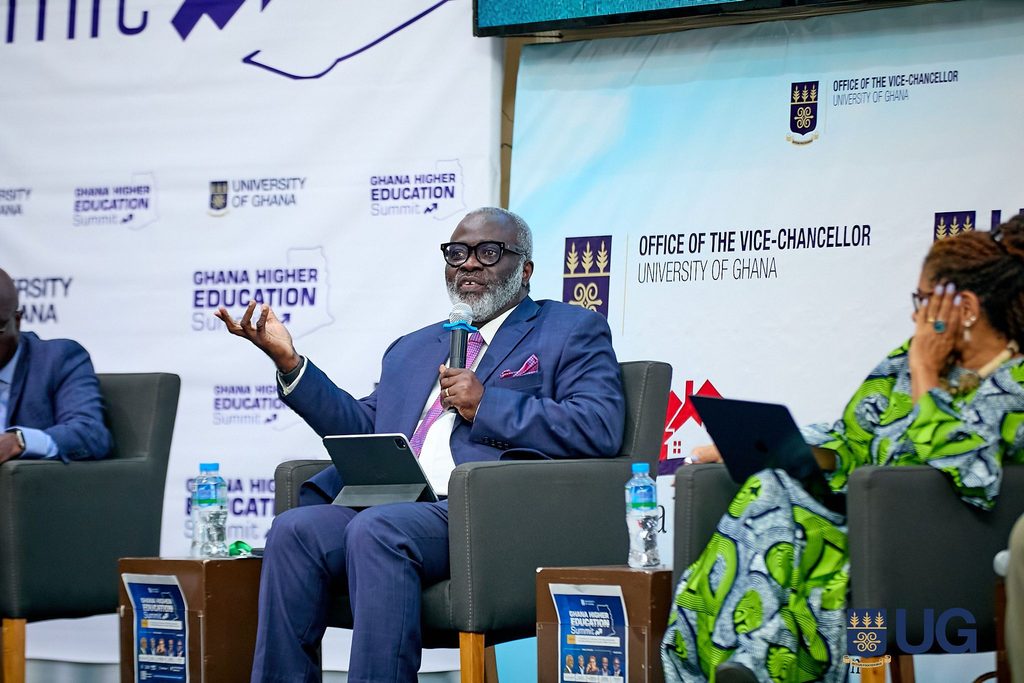
Participating in a high-level plenary panel, Professor John Gyapong brought his background as a public health physician, former Pro-Vice-Chancellor of Research, Innovation, and Development at the University of Ghana, and former Vice-Chancellor of the University of Health and Allied Sciences (UHAS), to bear and delivered a candid assessment of the current systemic bottlenecks. Rather than simply rediagnosing the funding crisis, which he noted had been well articulated, Prof. Gyapong challenged the higher education community to confront implementation failures for the solutions that had been proffered. He asked, “Why haven’t we done them? What is constraining us?”, urging stakeholders to get to the drawing board to implement the blueprints and solutions that are already well-known. He expressed strong optimism regarding the summit’s scope, noting his excitement that the conversation had successfully expanded beyond student tuition fees to focus on the holistic funding of teaching, learning, and research.
Prof. Gyapong’s contributions laid out an advocacy roadmap for structural reform not just in Ghana, but for the wider African higher education ecosystem. He noted that to successfully compete for major global grants, universities must professionalise their research management by establishing dedicated offices and employing specialised Research Development Officers trained in grant writing and compliance. This institutional focus must be paired with active resource sharing and infrastructure collocation to prevent wasteful duplication. He explained that instead of establishing public universities in “every corner” of the country, which dilutes national resources and drives specialised schools into “mission drift” (such as energy institutions opening nursing schools just to survive), universities should collocate facilities with local industry and share expensive high-end assets like high-speed computing.
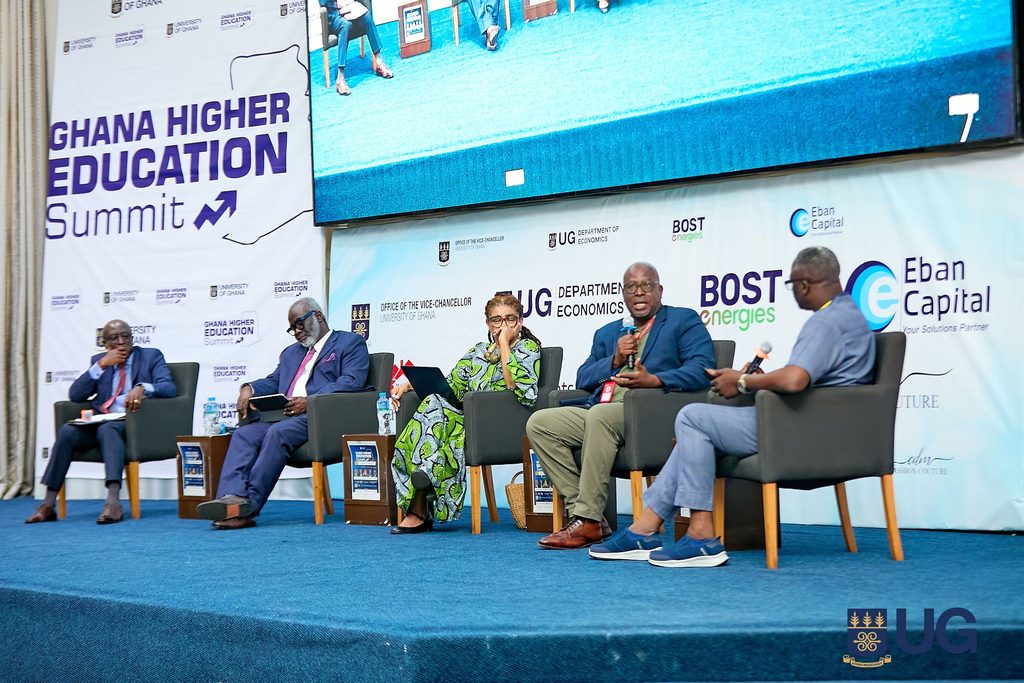
Furthermore, building directly on the keynote’s warning against treating unequal institutions as equal in the allocation of public resources, Prof. Gyapong advocated that state allocation bodies must reject “one-size-fits-all” funding models. He argued that established “big boy” institutions should support themselves so that state subventions can be heavily targeted toward newly founded, resource-poor universities. This reform requires granting vice-chancellors “real space” and autonomy to manage their institutions without political micromanagement, while the state must meet its commitment to dedicate 1% of GDP to the National Research Fund rather than stopping at seed funding. And to secure financial resilience, he agreed with his fellow panellists that African universities ought to bridge the alumni “trust deficit” by setting up legally separate, independent endowment boards, while actively improving their institutional advancement offices to systematically cultivate, track, and permanently recognise their graduates.
Delivering the final closing remarks, University of Ghana Vice-Chancellor and Vice-Chair of the ARUA Board, Professor Nana Aba Appiah Amfo officially closed the summit with a call to turn the ideas expressed into immediate, institutional action. She emphasised that while the overriding consensus is the urgent need to diversify higher education funding, no meaningful progress can be made without directly confronting and dismantling the rigid regulatory and legal bottlenecks that currently constrain public universities. She pledged to commit her remaining years in office to lead the charge to advocate for a formal classification of universities that permanently rejects “one-size-fits-all” funding models.
Summit photos courtesy of the University of Ghana.