ARUA Secretary-General Contributes to High-Level Dialogue at 2026 Day of Scientific Renaissance of Africa

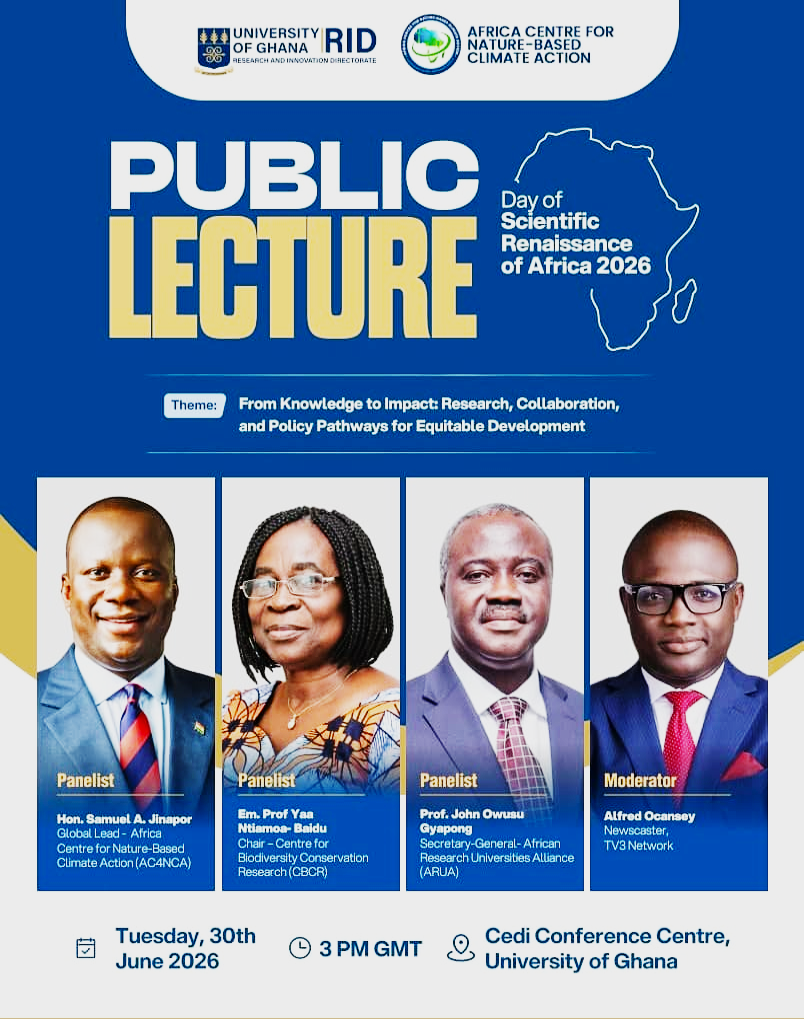
The African Research Universities Alliance (ARUA) participated in the 2026 Day of Scientific Renaissance of Africa (DSRA), hosted by the University of Ghana in June, contributing to continental discussions on strengthening research systems for equitable development.
Established by the African Union in 1987, DSRA is an annual platform to celebrate Africa’s scientific achievements and promote the role of science, technology, and innovation in development. This year’s event, held under the theme “Equitable Development: Research, Collaborate, Empower,” was organised by the University of Ghana’s Research and Innovation Directorate (RID). It also marked three key milestones: the DSRA 2026 celebration, the launch of the University’s 2024–2025 Research Report, and the 15th anniversary of its Office of Research, Innovation and Development.
ARUA Secretary-General, Professor John Gyapong, was invited as a featured panellist in a high-level discussion on “From Evidence to Impact: Building African Research Systems that Deliver Equitable Development.” In his contribution, Professor Gyapong underscored the importance of equitable collaboration in advancing the continent’s research and development agenda. He noted that while researchers are committed to their work, meaningful progress depends on how institutions work together. “We as researchers, we as academics enjoy the work of the research. So if we want to make progress as a continent, then you need to look at working together in an equitable manner so that the products of our collaboration can be shared,” he stated.
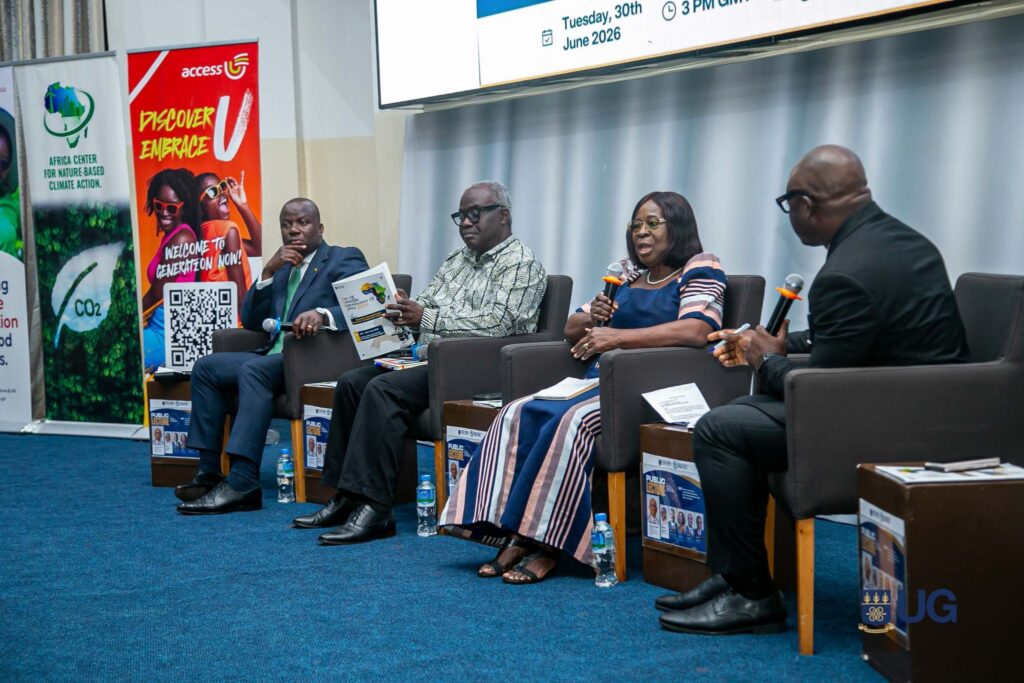
The event brought together a range of stakeholders from academia, policy, and international development. Hosted by the University of Ghana under the leadership of Vice-Chancellor Professor Nana Aba Appiah Amfo, it featured contributions from key partners including the Africa Centre for Nature-Based Climate Action, the Africa Climate Collaborative, the Nkabom Collaborative, the Mastercard Foundation, and McGill University.
Highlights included a keynote address by Mr. Balla Moussa Sidibe, Regional Director for West and Central Africa at the International Union for Conservation of Nature (IUCN), alongside participation from Hon. Samuel Abu Jinapor, Member of Parliament for Damongo and former Minister for Lands and Natural Resources, and Emerita Professor Yaa Ntiamoa-Baidu.
Discussions emphasised the importance of strengthening the link between research and policy, with a focus on ensuring that scientific knowledge informs decision-making processes. Climate resilience also featured prominently, with calls for greater investment in nature-based solutions as drivers of sustainable and equitable development.
Through mentoring sessions and an inter-university debate, the event further reinforced the importance of empowering the next generation of African researchers and innovators.