Beyond Participation: African Universities Driving Equitable Global Research Partnerships

The African Research Universities Alliance (ARUA) joined university leaders, policymakers, higher education networks, and international development partners in Nairobi, Kenya, for the IMPACT HE Leadership and Stakeholder Forum held from 6th to 7th May 2026. The forum explored how African universities are driving local development through research, innovation, advocacy, and strategic partnerships.
Convened under the IMPACT HE initiative, the forum provided a platform for dialogue on the societal impact of higher education cooperation, equitable global partnerships, African research leadership, and the role of universities as drivers of development.
ARUA was represented by Prof. Jane Ambuko, Director of Research and Training, who participated in a high-level panel discussion alongside Prof. Olusola Bandele Oyewole, Secretary General of the Association of African Universities (AAU); Prof. Idris Rai, Acting Executive Secretary of the Inter-University Council for East Africa (IUCEA); Prof. Stephen Simukanga, Executive Director of the Southern African Regional Universities Association (SARUA); and Prof. Ali Doumma, Director of Programmes and Head of CCI (Comités Consultatifs Interafricains), CAMES.
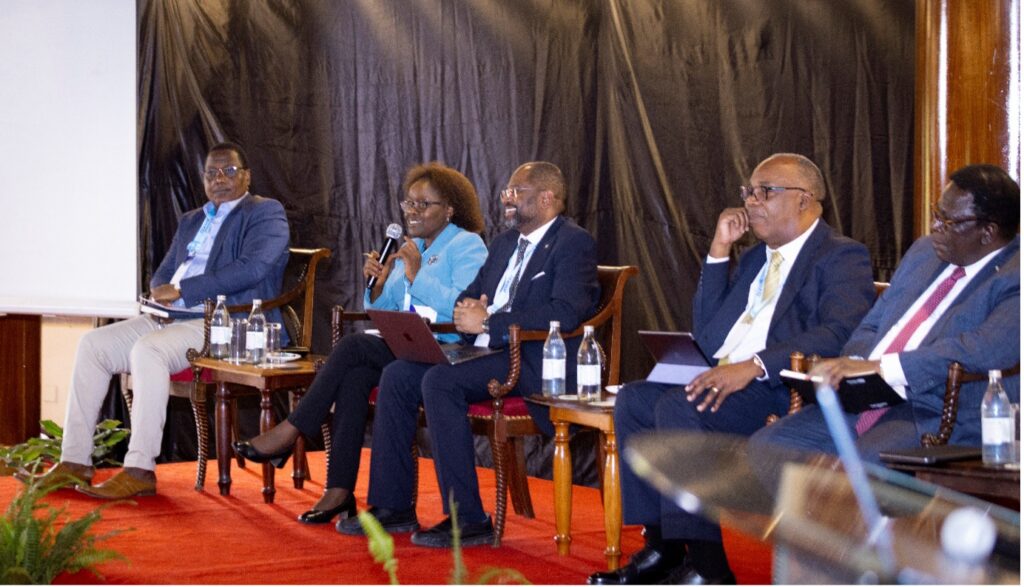
The panel discussion, themed “African Universities as Development Agents: The Role of Associations and Networks,” examined how continental associations and networks are supporting universities to realise their role as catalysts for development.
African Universities at the Centre of Development
A central message emerging from the forum was that African universities are increasingly taking a leading role in addressing some of the continent’s most pressing challenges, including climate change, food insecurity, public health, governance, migration, and urbanisation.
Prof. Ambuko highlighted ARUA’s role as a network of 23 leading African universities working collectively to strengthen research excellence while contributing directly to Africa’s socio-economic transformation through research and innovation.
ARUA universities currently host 13 interrelated Centres of Excellence, including six in the natural sciences and seven in the humanities:
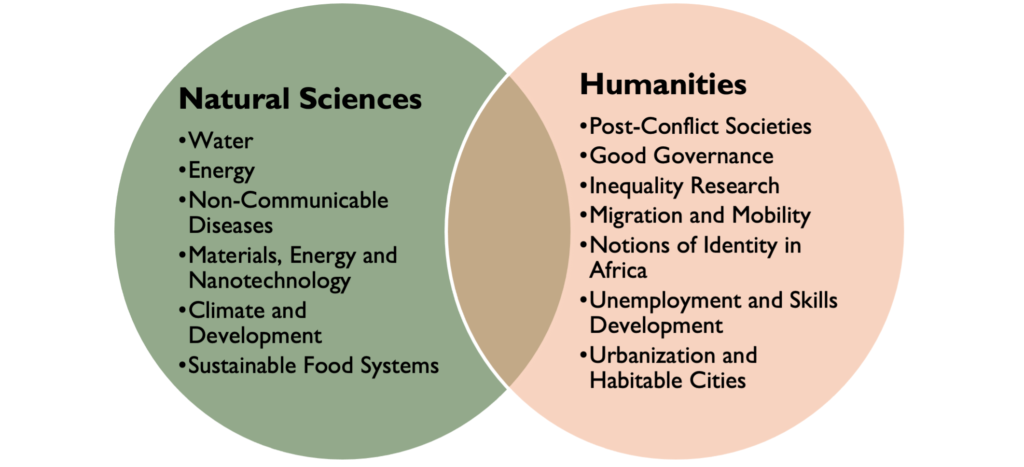
Prof. Ambuko noted that ARUA’s Centres of Excellence help translate global development priorities into locally relevant research, policy engagement, and practical solutions.
From Participation to Co-Creation and Partnership Leadership
Discussions throughout the forum underscored the need to reposition African universities from being just participants in international projects to becoming agenda-setters and co-creators of knowledge.
Participants emphasised that equitable partnerships require African researchers and institutions to play a central role in defining research priorities, shaping projects from the design stage, and sharing leadership during implementation.
ARUA shared examples of collaborative models that promote co-creation and shared ownership. In particular, ARUA’s partnership The Guild of European Research-Intensive Universities that birthed the Africa-Europe Clusters of Research Excellence – Africa-Europe CoRE was spotlighted as a good example. The CoREs initiative currently connects approximately 120 institutions across 44 countries through collaborative research partnerships aligned with the shared Africa-Europe Innovation Agenda.
The forum also highlighted the need for international partnerships to deliver tangible and long-term benefits for Africa through investments in human capital, research infrastructure, and institutional strengthening.
Participants stressed the importance of building stronger African-led research systems and securing sustainable investment in higher education and research. At the same time, discussions acknowledged a persistent challenge facing many African universities: funding power and agenda-setting authority still largely remain outside the continent.
Strengthening the Capacity of the Next Generation of African Researchers
ARUA used the forum to showcase initiatives aimed at strengthening research capacity and supporting the next generation of African scholars.
The ARUA Early-Career Researcher Programme, supported by the Mastercard Foundation and the Carnegie Corporation of New York, was highlighted as a strategic investment in Africa’s research future.
Strengthening the capacity of early-career researchers will enhance their negotiating power in agenda-setting processes while ensuring that African-led proposals are competitive, credible, and influential within the global funding landscape.
Why Advocacy and Visibility Matter
ARUA emphasised that university associations and networks play a critical role as conveners, advocates, and knowledge brokers by generating evidence, influencing policy discussions, and promoting research as a driver of sustainable development.
The discussions also underscored the importance of translating research into accessible public-facing outputs such as policy briefs, blogs, webinars, conferences, and strategic communications that clearly demonstrate the real-world impact of university research.
As the forum concluded, one message remained clear: the future of equitable global partnerships will depend on African universities having a stronger voice in setting research priorities, shaping development agendas, and leading knowledge production from the continent.
This was reflected in ARUA’s closing message:
“The future of Africa’s development will be shaped not just by strategic partnerships, but by who sets the agenda. Associations like ARUA ensure that African universities are firmly at that table.”


