Dr. Wakisa Kipandula

“The North-South collaboration is also important of course, but maybe instead of pulling researchers from Africa to go and train in the North, it’s better for researchers from Europe to come and teach African researchers in their own setting”
Dr. Wakisa Kipandula, molecular diagnostics and infectious disease researcher at Kamuzu University of Health Sciences, reflected on how collaboration across continents could be improved during the closing week of the AU-EU Health Partnership – a programme designed to strengthen research on mpox and Lassa fever.
During his visit to the University of Glasgow, one of the things that really impressed Wakisa was seeing the advanced technologies they have developed that can measure immune responses and evaluate the effectiveness of vaccines. “I’m coming from the molecular diagnostics and bacterial genomics background and seeing these assets is really impactful,” he explained. But the experience also highlighted a long-standing imbalance: Much of the research on diseases prevalent in Africa is still carried out in European laboratories. Several projects in Glasgow, he noted, were using samples shipped from Africa. One of the reasons for this, he says, could be that many African researchers simply do not have access to the same technologies. “We should look at how we can best build capacity locally to be able to do the research back home instead of sending the samples all the way to Europe.”
Wakisa emphasises the importance of promoting South-South collaboration, as a lot of African researchers are currently ‘working in silos’ instead of collaborating across institutions. He points out that even though North-South collaborations are important, it means less capacity is being built in Africa itself as many researchers train in the North. Once they return, it is difficult to implement what they have learned in their local settings. Instead, he says, it would be easier for a researcher from Malawi to travel to Uganda to exchange knowledge and do research.
To better respond to Lassa fever and mpox, Wakisa stressed the importance of coordination between governments and universities to combine efforts on outbreak investigation. In Malawi, for example, he says that they need to properly establish a transportation and management network for samples to better respond to the mpox epidemic. One issue, however, is that academic institutions lack funding to buy the necessary equipment and few have labs that can measure vaccine effectiveness. “There is a lack of capacity building to do these investigations in the labs that we have [..] and most universities don’t have a dedicated budget that can support researchers to conduct research on the mpox epidemic or even support the Ministry of Health”.
The experiences Wakisa gained during his time as a fellow in Uganda and Glasgow has changed the way thinks about translational research in the health sciences in Africa. “What I’ve learned so far is that it’s not just about collecting and publishing data, but that the data can be used to save lives”. Seeing how the University of Glasgow has developed technology that can measure the effectiveness of vaccines has inspired him to develop those kinds of technologies in Africa and to use it to work towards preventing future outbreaks rather than just measuring the effect during active outbreaks.
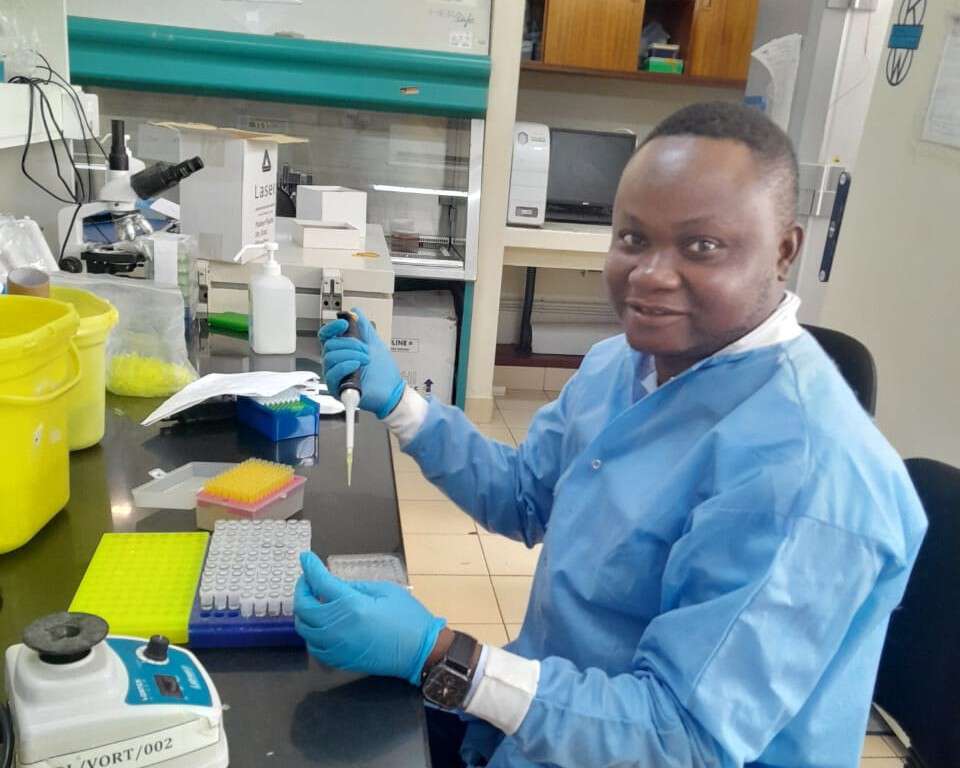
| Meet Wakisa Dr. Wakisa Kipandula is a molecular diagnostics and infectious disease researcher whose work spans serology, molecular biology, outbreak investigation, and laboratory quality systems. He established Malawi’s first university-based EQA programme and contributed to genomic analyses of major outbreaks, including cholera. Research focus: Rapid test suitable for precise diagnosis of Mpox in remote settings. Host institutions – Makerere University – Supervisor: Prof. Damalie Nakanjako – University of Glasgow – Supervisor: Prof. Lilach Sheiner – University of Bern – Supervisor: Dr. Phaedra Simitsek |
“The North-South collaboration is also important of course, but maybe instead of pulling researchers from Africa to go and train in the North, it’s better for researchers from Europe to come and teach African researchers in their own setting”
Dr. Wakisa Kipandula, molecular diagnostics and infectious disease researcher at Kamuzu University of Health Sciences, reflected on how collaboration across continents could be improved during the closing week of the AU-EU Health Partnership – a programme designed to strengthen research on mpox and Lassa fever.
During his visit to the University of Glasgow, one of the things that really impressed Wakisa was seeing the advanced technologies they have developed that can measure immune responses and evaluate the effectiveness of vaccines. “I’m coming from the molecular diagnostics and bacterial genomics background and seeing these assets is really impactful,” he explained. But the experience also highlighted a long-standing imbalance: Much of the research on diseases prevalent in Africa is still carried out in European laboratories. Several projects in Glasgow, he noted, were using samples shipped from Africa. One of the reasons for this, he says, could be that many African researchers simply do not have access to the same technologies. “We should look at how we can best build capacity locally to be able to do the research back home instead of sending the samples all the way to Europe.”
Wakisa emphasises the importance of promoting South-South collaboration, as a lot of African researchers are currently ‘working in silos’ instead of collaborating across institutions. He points out that even though North-South collaborations are important, it means less capacity is being built in Africa itself as many researchers train in the North. Once they return, it is difficult to implement what they have learned in their local settings. Instead, he says, it would be easier for a researcher from Malawi to travel to Uganda to exchange knowledge and do research.
To better respond to Lassa fever and mpox, Wakisa stressed the importance of coordination between governments and universities to combine efforts on outbreak investigation. In Malawi, for example, he says that they need to properly establish a transportation and management network for samples to better respond to the mpox epidemic. One issue, however, is that academic institutions lack funding to buy the necessary equipment and few have labs that can measure vaccine effectiveness. “There is a lack of capacity building to do these investigations in the labs that we have [..] and most universities don’t have a dedicated budget that can support researchers to conduct research on the mpox epidemic or even support the Ministry of Health”.
The experiences Wakisa gained during his time as a fellow in Uganda and Glasgow has changed the way thinks about translational research in the health sciences in Africa. “What I’ve learned so far is that it’s not just about collecting and publishing data, but that the data can be used to save lives”. Seeing how the University of Glasgow has developed technology that can measure the effectiveness of vaccines has inspired him to develop those kinds of technologies in Africa and to use it to work towards preventing future outbreaks rather than just measuring the effect during active outbreaks.
| Meet Wakisa Dr. Wakisa Kipandula is a molecular diagnostics and infectious disease researcher whose work spans serology, molecular biology, outbreak investigation, and laboratory quality systems. He established Malawi’s first university-based EQA programme and contributed to genomic analyses of major outbreaks, including cholera. Research focus: Rapid test suitable for precise diagnosis of Mpox in remote settings. Host institutions – Makerere University – Supervisor: Prof. Damalie Nakanjako – University of Glasgow – Supervisor: Prof. Lilach Sheiner – University of Bern – Supervisor: Dr. Phaedra Simitsek |


